Showing posts with label Android Studio. Show all posts

Thursday, June 26, 2014

Android L Developer Preview and Android Studio Beta

By Jamal Eason, Product Manager, Android


At the Google I/O keynote yesterday we announced the L Developer Preview — a development version of an upcoming Android release. The Developer Preview lets you explore features and capabilities of the L release and get started developing and testing on the new platform. You can take a look at the developer features and APIs in the API Overview page.


Starting today, the L Developer Preview is available for download from the L Developer Preview site. We're also announcing that Android Studio is now in beta, and making great progress toward a full release.


Let�s take a deeper dive into what�s included in the preview and what it means for you as a developer as you prepare your apps for the next Android release.


What�s in the L Developer Preview


The L Developer Preview includes updated SDK tools, system images for testing on an emulator, and system images for testing on a Nexus 5 or Nexus 7 device.


You can download these components through the Android SDK Manager:


  • L Developer Preview SDK Tools

  • L Developer Preview Emulator System Image - 32-bit (64-bit experimental emulator image coming soon)

  • L Developer Preview Emulator System Image for Android TV (32-bit)


(Note: the full release of Android Wear is a part of Android KitKat, API Level 20. Read more about Android Wear development here.)


Today, we are also providing system image downloads for these Nexus devices to help with your testing as well:


  • Nexus 5 (GSM/LTE) �hammerhead� Device System Image

  • Nexus 7 [2013] - (Wifi) �razor� Device System Image


You can download both of these system images from the L Developer Preview site.

With the SDK Tools, and Nexus device images, you can get a head start on testing out your app on the latest Android platform months before the official launch. You can use the extra lead time to take advantage of all the new app features and APIs in your apps. The Nexus device images can help you with testing, but keep in mind that they are meant for development purposes only and should not be used on a production device.


Notes on APIs and publishing


The L Developer Preview is a development release and does not have a standard API level. The APIs are not final, and you can expect minor API changes over time.


To ensure a great user experience and broad compatibility, you can not publish versions of your app to Google Play that are compiled against L Developer Preview. Apps built for L Developer Preview will have to wait until the full official launch to publish on Google Play.


Android Studio Beta


To help you develop your apps for the upcoming Android version and for new Android device types, we�re also happy to announce Android Studio Beta. Android Studio Beta helps you develop apps by enabling you to:


  • Incorporate the new material design and interaction elements of the L Developer Preview SDK

  • Quickly create and build apps with a new app wizard and layout editor support for Android Wear and Android TV


Building on top of the build variants and flavors features we introduced last year, the Android Studio build system now supports creating multiple apks, such as for devices like Android Wear. You can try out all the new features with the L Developer Preview by downloading the Android Studio Beta today.


How to get started


To get started with the L Developer Preview and prepare your apps for the full release, just follow these steps:


  1. Try out Android Studio Beta

  2. Visit the L Developer Preview site

  3. Explore the new APIs

  4. Enable the material theme and try out material design on your apps

  5. Get the emulator system images through the SDK Manager or download the Nexus device system images.

  6. Test your app on the new Android Runtime (ART) with your device or emulator

  7. Give us feedback


As you use the new developer features and APIs in the L Developer Preview, we encourage you to give us your feedback using the L Developer Preview Issue Tracker. During the developer preview period, we aim to incorporate your feedback into our new APIs and adjust features as best as we can.


You can get all the latest downloads, documentation, and tools information from the L Developer Preview site on developer.android.com. You can also check our Android Developer Preview Google+ page for updates and information.


We hope you try the L Developer Preview as you start building the next generation of amazing Android user experiences.


Get it on Google Play

Wednesday, June 18, 2014

New ways to connect your app to the Cloud using Android Studio and Google Cloud Platform

Posted by Manfred Zabarauskas, Product Manager on Google Cloud Platform

Many Android developers like Snapchat or Pulse build and host their app backends on the Google Cloud Platform, and enjoy automatic management, with simple expansion to support millions of users.


To quickly add a Google Cloud Platform backend to your Android app, you can now use a number of built-in features in Android Studio 0.6.1+.


Google App Engine backend module templates


Google App Engine enables you to run your backend applications on Google's infrastructure, without ever requiring you to maintain any servers.


To simplify the process of adding an App Engine backend to your app, Android Studio now provides three App Engine backend module templates which you can add to your app. You can find them under "New → Module" menu:


  1. App Engine Java Servlet Module provides a simple App Engine Java backend servlet with minimal boilerplate code,

  2. App Engine Java Endpoints Module template leverages Google Cloud Endpoints for your backend, and includes automated object marshalling/unmarshalling, generation of strongly-typed Java client libraries and so on,

  3. App Engine Backend with Google Cloud Messaging includes both Google Cloud Endpoints and Google Cloud Messaging integration, which enables additional features like push notifications.


When you choose one of these template types, a new Gradle module with your specified module/package name will be added to your project containing your new App Engine backend. All of the required dependencies/permissions will be automatically set up for you.


You can then run it locally (on http://localhost:8080) by selecting the run configuration with your backend's module name, as shown in the image below.


For more information about these backend templates, including their deployment live to App Engine and code examples which show how to connect your Android app to these backends, see their documentation on GitHub. (Also, the code for these templates lives in the same GitHub repository, so do not hesitate to submit a pull request if you have any suggestions!)


Built-in rich editing support for Google Cloud Endpoints


Once you have added the backend module to your Android application, you can use Google Cloud Endpoints to streamline the communication between your backend and your Android app. Cloud Endpoints automatically generate strongly-typed client libraries from simple Java server-side API annotations, automate Java object marshalling to and from JSON, provide built-in OAuth 2.0 support and so on.


As a concrete example, "App Engine Java Endpoints Module" contains a simple annotated Endpoints API at <backend-name>/src/main/java/<package-name>/MyEndpoint.java file (shown below):


import javax.inject.Named;

@Api(name = "myApi",
version = "v1",
namespace = @ApiNamespace(ownerDomain = "<package-name>",
ownerName = "<package-name>",
packagePath=""))
public class MyEndpoint {
@ApiMethod(name = "sayHi")
public MyBean sayHi(@Named("name") String name) {
MyBean response = new MyBean();
response.setData("Hi, " + name);
return response;
}
}


On deployment, this annotated Endpoints API definition class generates a RESTful API. You can explore this generated API (and even make calls to it) by navigating to Endpoints API explorer as shown in the image below:


Google APIs explorer is available at http://localhost:8080/_ah/api/explorer once you deploy your app. Color overlays in this screenshot match the colors in the API snippet above (MyEndpoint.java).


To simplify calling this generated API from your Android app, Android Studio will automatically set up your project to automatically include all compile dependencies and permissions required to consume Cloud Endpoints, and will re-generate strongly-typed client libraries if your backend changes. This means that you can start calling the client libraries from your Android app immediately after defining the server-side Endpoints API:


Code completion for automatically generated, strongly-typed client libraries. Color overlays match the colors in the API snipped above (MyEndpoint.java)


As server-side Endpoints API definitions have to conform to a number of syntactic rules, Android Studio also includes a number of Endpoints-specific inspections and quick-fixes, which help you to avoid mistakes when writing Endpoints APIs.


For example, "@Named" annotation is required for all non-entity type parameters passed to server-side methods. If you forget to add this annotation when modifying sayHi method in MyEndpoint.java file, Android Studio will underline the problematic statement as-you-type:


Furthermore, to help you easily fix the problems with Cloud Endpoints, Android Studio will provide quick-fixes for the most common Cloud Endpoints development mistakes. To see these quick-fix suggestions, press Alt + Enter if you're running on Linux/Windows or ⌥ + Enter if you're running on Mac:


As expected, choosing the first quick-fix ("Add @Named") will automatically add "@Named" annotation to method's parameter, solving this problem in two key presses.


The underlying work-horses: Gradle, and Gradle plug-in for App Engine


Under the hood, Gradle is used to build both your app and your App Engine backend. In fact, when you add an App Engine backend to your Android app, an open-source App Engine plug-in for Gradle is automatically downloaded by Android Studio, and common App Engine tasks become available as Gradle targets. This allows you to use the same build system across your IDE, command-line or continuous integration environments.


For example, to deploy your backend to App Engine from Android Studio, you can launch the "appengineUpdate" task from the "Gradle tasks" tool window:


Similarly, if you want to integrate your backend's deployment into your command-line scripts, simply launch "./gradlew backend:appengineUpdate" command from your project's root directory.


Try out a codelab, or see these features live at Google I/O 2014!


If you want to give these features a spin in a more guided environment, try out our Cloud Endpoints codelab for Android. We will also be demonstrating some of these features live at Less Code, More Services, Better Android Apps session in Google I/O 2014 (as well as some of the new and even more exciting stuff), so don't forget to tune in!


We look forward to your questions or feedback, and learning about the amazing applications you have built using Android Studio and Google Cloud Platform. You can find us lurking on StackOverflow's App Engine and Cloud Endpoints forums!


Wednesday, June 26, 2013

Adding a Backend to Your App In Android Studio

Posted by Sachin Kotwani, Google Cloud Platform team

Android Studio lets you easily add a cloud backend to your application, right from your IDE. A backend allows you to implement functionality such as backing up user data to the cloud, serving content to client apps, real-time interactions, sending push notifications through Google Cloud Messaging for Android (GCM), and more. Additionally, having your application�s backend hosted on Google App Engine means that you can focus on what the cloud application does, without having to worry about administration, reliability or scalability.


When you create a backend using Android Studio, it generates a new App Engine application under the same project, and gives your Android application the necessary libraries and a sample activity to interact with that backend. Support for GCM is built-in, making it easy to sync data across multiple devices. Once you've generated the project, you can build and run your client and server code together, in a single environment, and even deploy your backend code right from Android Studio.


In this post we�ll focus on how to get started with the basic setup. From there it's easy to extend the basic setup to meet your needs.


Preliminary setup


Before you get started, make sure you take care of these tasks first:


  • Download Android Studio if you haven�t done so already and set it up.

  • Make sure you have an application project set up in Android Studio. You can use any working app that you want to integrate with your backend, even a sample app.

  • If you'll be running the app on an emulator, download the Google APIs Addon from the SDK Manager and run your app on that image.


  • Create a Google Cloud Platform project: In the Cloud Console, create a new project (or reuse an old one) and make note of the Project ID. Click on the words �Project ID� on the top left to toggle to the Project Number. Copy this as well.

  • Enable GCM and obtain API Key: In the Cloud Console, click on APIs and turn on the Google Cloud Messaging for Android API. Then, click on the �Register App� button on the top left, enter a name for the app, then select �Android� and �Accessing APIs via a web server�. In the resulting screen, expand the �Server Key� box and copy the API key.


1. Generate an App Engine project


In Android Studio, open an existing Android application that you want to modify, or create a new one. Select the Android app module under the Project node. Then click Tools > Google Cloud Endpoints > Create App Engine Backend.


In the wizard, enter the Project ID, Project Number, and API Key of your Cloud project.


This will create:


  • An App Engine project which contains the backend application source

  • An endpoints module with a RegisterActivity class, related resources, and client libraries for the Android app to communicate with the backend


The generated App Engine application (<app_name>-AppEngine) is an Apache Maven-based project. The Maven pom.xml file takes care of downloading all the dependencies, including the App Engine SDK. This module also contains the following:


  • A Google Cloud Endpoint (DeviceInfoEndpoint.java, auto-generated from DeviceInfo.java) that your Android app will �register� itself through. Your backend will use that registration info to send a push notification to the device.

  • A sample endpoint, MessageEndpoint.java, to list previously sent GCM messages and send new ones.

  • A starter web frontend application (index.html in webapp directory) that will show all the devices that have registered with your service, and a form to send them a GCM notification.


The endpoints module (<app_name>-endpoints) generated for you contains the classes and libraries needed by the Android application to interact with the backend:


  • A RegisterActivity.java class that, when invoked, will go through the GCM registration flow and also register itself with the recently created backend through DeviceInfoEndpoint.

  • Client libraries, so that the application can talk to the backend using an object rather than directly using raw REST calls.

  • XML files related to the newly created activity.


2. Add GCM registration to your app


In your Android application, you can call RegisterActivity whenever you want the registration to take place (for example, from within the onCreate() method of your main activity.


...
import android.content.Intent;
...

@Override
protected void onCreate(Bundle savedInstanceState) {
...
Intent intent = new Intent(this, RegisterActivity.class);
startActivity(intent);
}


3. Deploy the sample backend server


When you're ready to deploy an update to your ( the sample ) production backend in the cloud, you can do that easily from the IDE. Click on the �Maven Projects� button on the right edge of the IDE, under Plugins > App Engine, right-click and run the appengine:update goal.


As soon as the update is deployed, you can also access your endpoints through the APIs Explorer at http://<project-id>.appspot.com/_ah/api/explorer.


For testing and debugging, you can also run your backend server locally without having to deploy your changes to the production backend. To run the backend locally, just set the value of LOCAL_ANDROID_RUN to true in CloudEndpointUtils.java in the App Engine module.


4. Build and run the Android app


Now build and run your Android app. If you called RegisterActivity from within your main activity, the device will register itself with the GCM service and the App Engine app you just deployed. If you are running the app on an emulator, note that GCM functionality requires the Google APIs Addon image, which you can download from the SDK Manager.


You can access your sample web console on any browser at http://<project-id>.appspot.com. There, you will see that the app you just started has registered with the backend. Fill out the form and send a message to see GCM in action!


Extending the basic setup


It's easy to expand your cloud services right in Android Studio. You can add new server-side code and through Android Studio instantly generate your own custom endpoints to access those services from your Android app.


Thursday, May 30, 2013

Watch Android @ Google I/O 2013

Posted by Reto Meier, Android Developer Relations Tech Lead


We had a lot to talk about this year at I/O. We launched Google Play services 3.1 with Google Play games services, improved Location APIs, and Google Cloud Messaging enhancements; Android Studio: A new IDE for Android development based on IntelliJ IDEA Community Edition; and Google Play Developer Console improvements such as app translation service, revenue graphs, beta testing & staged rollouts, and optimization tips.


With the excitement of these announcements behind us, it's time to sit back, relax, and watch all the sessions we missed during the event. To make that easier, we've collected all the Android sessions together in the Android @ Google I/O 13 page on the developer site.


We've also created the Google I/O 13 - The Android Sessions playlist (embedded below), as well as playlists for each developer category: design, develop, and distribute.


For those of you who prefer listening to your I/O talks without the distraction of watching speakers and slides, we're also making the sessions available as part of the Android Developers Live Podcast.


Google I/O is always a highlight on the Android Developer Relations team's calendar, so we'll be keeping the magic alive with our Android Developers Live broadcasts.


This week we resumed our regular broadcasts with Android Design in Action offering a review of Android Design sessions at I/O. Next week will see the return of This Week in Android Development and The App Clinic, and stay tuned for more episodes of Table Flip, GDG App Clinics, and more!


We'll also continue to add new DevBytes and BizDevBytes to offer tips and tricks for improving your apps and making them more successful.


As always you can talk to us and keep track of our upcoming broadcasts, Android Studio news, and other Android developer news on the +Android Developers Google+ page.


Wednesday, May 15, 2013

Android Studio: An IDE built for Android

Posted by Xavier Ducrohet, Tor Norbye, Katherine Chou


Today at Google I/O we announced a new IDE that�s built with the needs of Android developers in mind. It�s called Android Studio, it�s free, and it�s available now for you to try as an early access preview.


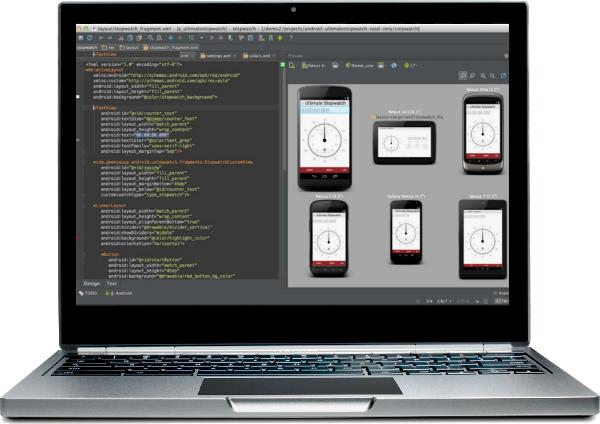
To develop Android Studio, we cooperated with JetBrains, creators of one of the most advanced Java IDEs available today. Based on the powerful, extensible IntelliJ IDEA Community Edition, we've added features that are designed specifically for Android development, that simplify and optimize your daily workflow.


Extensible build tools


We know you need a build system that adapts to your project requirements but extends further to your larger development environment. Android Studio uses a new build system based on Gradle that provides flexibility, customized build flavors, dependency resolution, and much more.


This new build system allows you to build your projects in the IDE as well as on your continuous integrations servers. The combination lets you easily manage complex build configurations natively, throughout your workflow, across all of your tools. Check out the preview documentation to get a better idea of what the new build system can do.


Powerful code editing


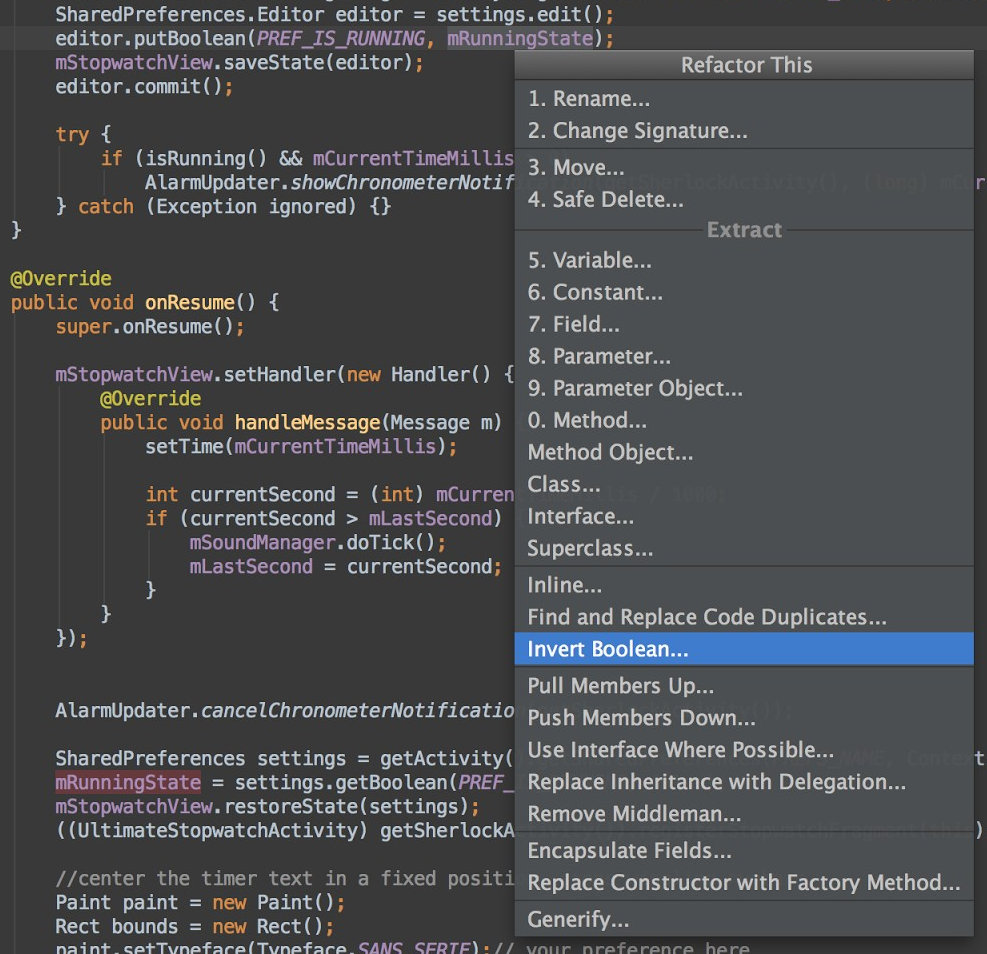
Android Studio includes a powerful code editor. It's based on the IntelliJ IDEA editor, which supports features such as smart editing, advanced code refactoring, and deep static code analysis.


Smart editing features such as inline resource lookups make it easier to read your code, while giving you instant access to edit code the backing resources. Advanced code refactoring gives you the power to transform your code across the scope of the entire project, quickly and safely.


We added static code analysis for Android development, helping you identify bugs more quickly. On top of the hundreds of code inspections that IntelliJ IDEA provides, we�ve added custom inspections. For example, we�ve added metadata to the Android APIs, that flag which methods can return null and which can�t, which constants are allowed for which methods, and so on. Android Studio uses that data to analyze your code and find potential errors.


Smoother and richer GUI


Over the past year we�ve added some great drag-and-drop UI features to ADT and we�re in the process of adding them all into Android Studio. This release of Android Studio lets you preview your layouts on different device form factors, locales, and platform versions.


Easy access to Google services
within Android Tools


We wanted to make it easy for you to harness the power Google services right from your IDE. To start, we�ve made it trivial to add services such a cloud-based backend with integrated Google Cloud Messaging (GCM) to your app, directly from the IDE.


We�ve also added a new plugin called ADT Translation Manager Plugin to assist with localizing your apps. You can use the plugin to export your strings to the Google Play Developer Console for translation, then download and import your translations back into your project.


Open source development


Starting next week we�ll be doing all of our development in the open, so you can follow along or make your own contributions. You can find the Android Studio project in AOSP at https://android.googlesource.com/platform/tools/adt/idea/


Try Android Studio and give us feedback


Give Android Studio a try and send us your feedback! It's free, and the download bundle includes includes everything you need, including the IDE, the latest SDK tools, the latest Android platform, and more. .


Note: This is an early access preview intended for early adopters and testers who want to influence the direction of the Android tools. If you have a production app with a large installed base, there�s no need to migrate your development to the new tools at this time. We will continue to support Eclipse as a primary platform for development.


If you have feedback on the tools, you can send it to us using the Android Studio issue tracker.


Android at Google I/O 2013: Keynote Wrapup


The last year has been an exciting one for Android developers, with an incredible amount of momentum. In fact, over 48 billion apps have been downloaded from Google Play to date, with over 2.5 billion app downloads in the last month alone.


This week, at Google I/O, our annual developer conference, we�re celebrating this momentum, and putting on stage a number of new features and advancements both for the Android platform and Google Play, to help you design, develop and distribute great apps to your users.


We just wrapped up the keynote, and wanted to share a number of those new features; we�ll be spotlighting some of them throughout the week both here, on Google+, and in 36 Android sessions and sandboxes at the Moscone center in San Francisco (with many of the sessions livestreamed at developer.google.com). Enjoy!


Google Play Services 3.1


Google Play Services is our platform for bringing you easier integration with Google products and new capabilities to use in your apps. Today we announced a new version of Google Play Services that has some great APIs for developers.


  • Google Play games services give you great new social features that you can add to your games   achievements, leaderboards, cloud save, and real-time multiplayer

  • Location APIs make it easy to add location- and context-awareness to your apps through a fused location provider, geofencing, and activity recognition

  • Google Cloud Messaging enhancements let you use bidirectional XMPP messaging between server and devices and dismiss notifications

  • Cross-Platform Single Sign On, which lets your users sign in once, for all of their devices using Google+ Sign-In.


Android Studio: A new IDE for Android development


Today we announced a new Integrated Development Environment (IDE) built just for Android, with the needs of Android developers in mind. It�s called Android Studio, it�s free, and it�s available now to try as an early access preview.


To build Android Studio, we worked with with JetBrains, creators of one of the most advanced Java IDEs available today. Based on the powerful, extensible IntelliJ IDEA Community Edition, we've added features and capabilities that are designed specifically for Android development, to simplify and optimize your daily workflow for creating Android apps.


Google Play Developer Console: a better distribution experience


Building awesome Android apps is only part of the story. Today we announced great new features in the Google Play Developer Console that give you more control over how you distribute your app and insight into how your app is doing:


  • App translation service: a pilot program that lets you purchase professional translations for your app directly from the Developer Console.

  • Revenue graphs: a new tab in the Developer Console gives you a summary of your app global app revenue over time.

  • Alpha and beta testing and staged rollouts: you can now distribute your app to controlled alpha and beta test groups, or do staged rollouts to specific percentages of your userbase.

  • Optimization tips: design your app for tablets and understand how to expand your app into new language markets.

  • Google Analytics: launching later this summer, your Google Analytics usage stats will be viewable right in the Developer Console.

  • Referral tracking: also launching later this summer, you�ll get a new report in Google Analytics to show what blogs, campaigns, and ads are driving your installs.


Follow the Android Sessions


Join us for the Android sessions today and through the week by livestream. Visit the I/O Live Stream schedule for details.